| 2015 | Stephen Curry | Golden State Warriors | ||||||
| 2014 | Kevin Durant | Oklahoma City Thunder | ||||||
| 2013 | LeBron James | Miami Heat | ||||||
| 2012 | LeBron James | Miami Heat | ||||||
| 2011 | Derrick Rose | Chicago Bulls | ||||||
| 2010 | LeBron James | Cleveland Cavaliers | ||||||
| 2009 | LeBron James | Cleveland Cavaliers | ||||||
| 2008 | Kobe Bryant | Los Angeles Lakers | ||||||
| 2007 | Dirk Nowitzki | Dallas Mavericks | ||||||
| 2006 | Steve Nash | Phoenix Suns | ||||||
| 2005 | Steve Nash | Phoenix Suns | ||||||
| 2004 | Kevin Garnett | Minnesota Timberwolves | ||||||
| 2003 | Tim Duncan | San Antonio Spurs | ||||||
| 2002 | Tim Duncan | San Antonio Spurs | ||||||
| 2001 | Allen Iverson | Philadelphia 76ers | ||||||
| 2000 | Shaquille O'Neal | Los Angeles Lakers | ||||||
| 1999 | Karl Malone | Utah Jazz | ||||||
| 1998 | Michael Jordan | Chicago Bulls | ||||||
| 1997 | Karl Malone | Utah Jazz | ||||||
| 1996 | Michael Jordan | Chicago Bulls | ||||||
| 1995 | David Robinson | San Antonio Spurs | ||||||
| 1994 | Hakeem Olajuwon | Houston Rockets | ||||||
| 1993 | Charles Barkley | Phoenix Suns | ||||||
| 1992 | Michael Jordan | Chicago Bulls | ||||||
| 1991 | Michael Jordan | Chicago Bulls | ||||||
| 1990 | Magic Johnson | Los Angeles Lakers | ||||||
| 1989 | Magic Johnson | Los Angeles Lakers | ||||||
| 1988 | Michael Jordan | Chicago Bulls | ||||||
| 1987 | Magic Johnson | Los Angeles Lakers | ||||||
| 1986 | Larry Bird | Boston Celtics | ||||||
| 1985 | Larry Bird | Boston Celtics | ||||||
| 1984 | Larry Bird | Boston Celtics | ||||||
| 1983 | Moses Malone | Philadelphia 76ers | ||||||
| 1982 | Moses Malone | Houston Rockets | ||||||
| 1981 | Julius Erving | Philadelphia 76ers | ||||||
| 1980 | Kareem Abdul-Jabbar | Los Angeles Lakers | ||||||
| 1979 | Moses Malone | Houston Rockets | ||||||
| 1978 | Bill Walton | Portland Trail Blazers | ||||||
| 1977 | Kareem Abdul-Jabbar | Los Angeles Lakers | ||||||
| 1976 | Kareem Abdul-Jabbar | Los Angeles Lakers | ||||||
| 1975 | Bob McAdoo | Buffalo Braves | ||||||
| 1974 | Kareem Abdul-Jabbar | Milwaukee Bucks | ||||||
| 1973 | David Cowens | Boston Celtics | ||||||
| 1972 | Kareem Abdul-Jabbar | Milwaukee Bucks | ||||||
| 1971 | Kareem Abdul-Jabbar | Milwaukee Bucks | ||||||
| 1970 | Willis Reed | New York Knicks | ||||||
| 1969 | Westley Unseld | Baltimore Bullets | ||||||
| 1968 | Wilt Chamberlain | Philadelphia 76ers | ||||||
| 1967 | Wilt Chamberlain | Philadelphia 76ers | ||||||
| 1966 | Wilt Chamberlain | Philadelphia 76ers | ||||||
| 1965 | Bill Russell | Boston Celtics | ||||||
| 1964 | Oscar Robertson | Cincinnati Royals | ||||||
| 1963 | Bill Russell | Boston Celtics | ||||||
| 1962 | Bill Russell | Boston Celtics | ||||||
| 1961 | Bill Russell | Boston Celtics | ||||||
| 1960 | Wilt Chamberlain | Philadelphia Warriors | ||||||
| 1959 | Bob Pettit | St. Louis Hawks | ||||||
| 1958 | Bill Russell | Boston Celtics | ||||||
| 1957 | Bob Cousy | Boston Celtics | ||||||
| 1956 | Bob Pettit | St. Louis Hawks | ||||||
Sunday, 8 May 2016
NBA Most Valuable Player
The Most Valuable Player Award is the most prestigious award that can be won by a player in the NBA. The award is given out annually to the player who was chosen to be the best player in the league during that regular season. The winner of the award is voted on by a group of sportswriters and media members.

Famous Photos


Jordan falls to the floor in tears after winning the 1996 NBA Championship in Fathers Day, 3 years after the murder of his father

Sunday, 3 April 2016
Evolution of the Hoop


Legend Profile - Wilt Chamberlain (Part 1)

Wilt Chamberlain was an American basketball player who played for the San Francisco Warriors, the Philadelphia 76ers and the Los Angeles Lakers of the NBA between 1959 and 1973. Chamberlain in regarded as one of the greatest basketball players of all time by fans, though he has somewhat of a mythic aura about him as their exists little footage of the the early part of his career.
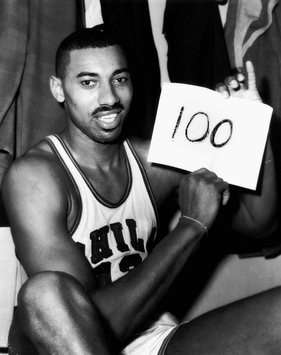
Chamberlain achieved an incredible amount during his career, setting an insane amount of records and winning numerous awards. However, some question the legitimacy of Wilt's greatness as he played in the league at a time where his 7'1 height was greatly taller than the average height of players. It is believed by some that Wilt would not be as dominant as he was if he played in today's league. Chamberlain is perhaps most famous for being the only player ever to score 100 points in a game.
Chamberlain played for 3 years at the University of Kansas, where he was almost ridiculously dominant. Chamberlains college career was plagued with racism that followed him almost everywhere throughout the Midwestern and Southern United States. His dominance was so profound that he was double and sometimes even tripled teamed by opponents in almost every game. This was incredibly frustrating for Chamberlain, so much so that he decided to leave Kansas 1 year early to become a professional player. However at the time, the NBA did not take players that did not finish their full 4 years of study, so Chamberlain decided to join the gimmick team Harlem Globetrotters. He spent one year with the Globetrotters, where he saw great success, including a record breaking sold out tour of the Soviet Union.
On October 24th 1959, Chamberlain joined the NBA with the Philadelphia Warriors. He immediately became the highest paid player in NBA history, making the equivalent of $244 000 USD today before ever stepping on the court. In his first game against the Knicks, Wilt scored 43 points and pulled down 28 rebounds. In his 4th game, he met the then champion Boston Celtics anchored by the legendary Bill Russell and coached by the legendary Red Auerbach. Wilt would outscore Russell 30 points to 28, but Boston won the game. This was the beginning of perhaps the greatest single player rivalry in basketball history.
In his first NBA season, Chamberlain averaged 37.6 points and 27 rebounds, convincingly breaking the previous regular-season records. He needed only 56 games to score 2,102 points, which broke the all-time regular season scoring record of Bob Pettit, who needed 72 games to score 2,101 points. Chamberlain broke eight NBA records, and was named NBA MVP and Rookie of the Year that season.
After just his first season Chamberlain saw many parallels with his college career, and publicly mulled retirement. He stated he was sick of being double and tripled teamed and being aggressively fouled constantly, and he feared one day he would lose his cool and get violent with an opponent. However, the Warriors owner was able to convince him to return by increasing his salary to the equivalent of $510 000 USD today.
The following season, Chamberlain surpassed his rookie season statistics as he averaged 38.4 points and 27.2 rebounds per game. He became the first player to break the 3,000-point barrier and the first and still only player to break the 2,000-rebound barrier for a single season, grabbing 2,149 boards. Chamberlain also won his first field goal percentage title, and set the all-time record for rebounds in a single game with 55. Chamberlain was so dominant on the team that he scored almost 32% of his team's points and collected 30.4% of their rebounds
In the his third season, he averaged 50.4 points and grabbed 25.7 rebounds per game. On March 2, 1962, Wilt scored 100 points against the New York Knicks. Chamberlain's 4,029 regular-season points made him the only player to break the 4,000-point barrier (the only other player to break even the 3,000-point barrier is Michael Jordan in 1986-87). Amazingly, he was on the court for an average of 48.53 minutes, more than the 48 minute length of an NBA game, due to his participation in overtime periods. He was on the court for all but 8 minutes of the Warriors season, because he was ejected in a game with 8 minutes left. In the 1962 playoffs, the Warriors again were unable to convert Wilts dominance into a title, losing to the Celtics in the Eastern Conference Finals.
In 1963, the Warriors were sold to a group of investors in San Francisco, and they relocated, becoming the San Francisco Warriors. However Chamberlain's woes continued in San Francisco. Even with the help of future NBA Hall of Famer Nate Thurmond, he was unable to win a Championship with the Warriors, losing to the Celtics again, this time in the NBA Finals. In 1965, Chamberlain was traded back to his hometown of Philadelphia, this time to join the newly relocated Philadelphia 76ers.
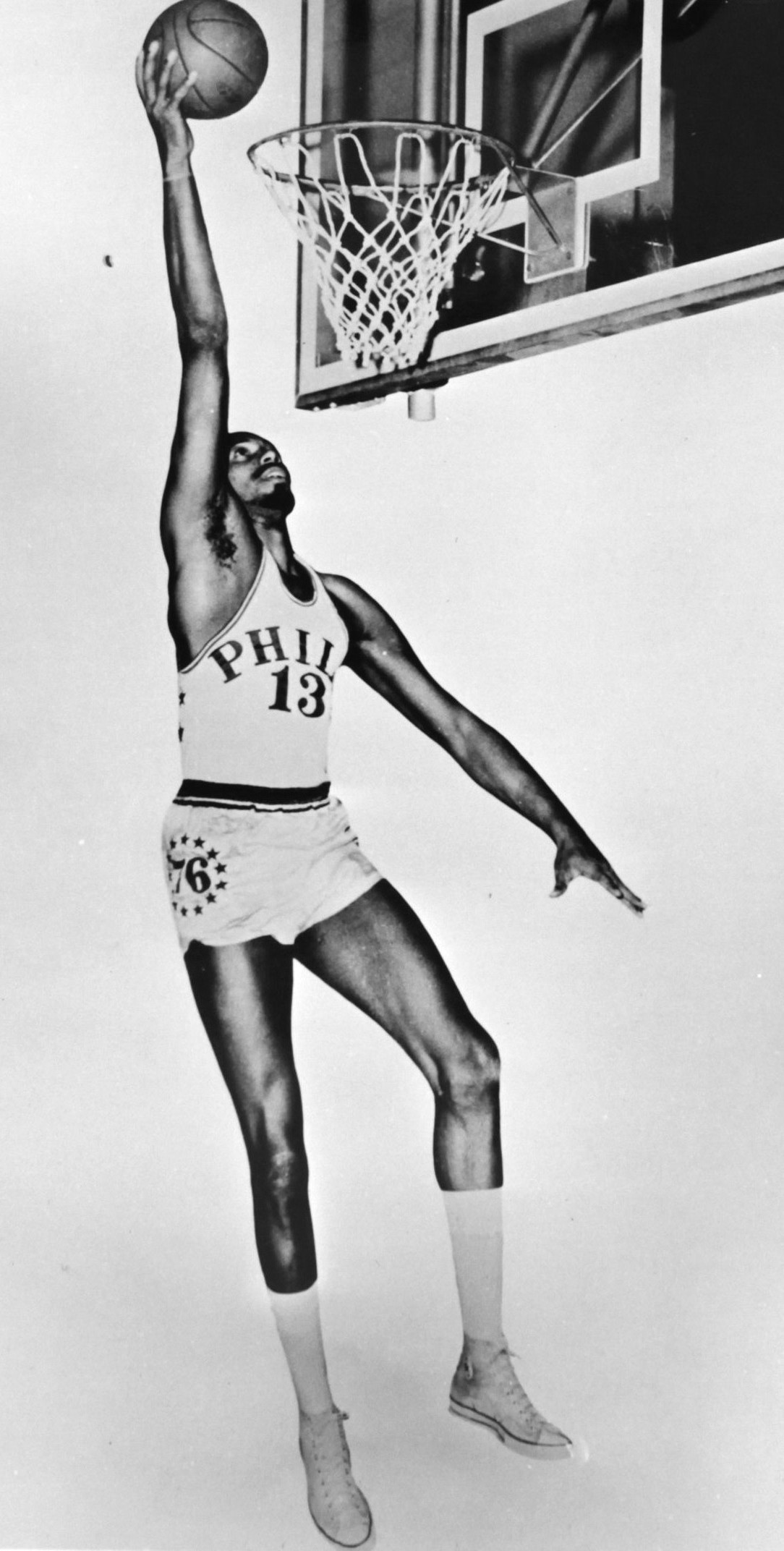
Chamberlain joined a strong 76ers team in Philadelphia, joining future Hall of Famer Hal Greer. However in the 1965 playoffs, Chamberlain again fell to the Boston Celtics in the 2nd round of the Playoffs. This was when the reputation of "loser" began to plague Chamberlain. The following year Chamberlain was just as dominant, and would win the MVP Award, however his coach and teammates doubted his commitment. He was regularly late to practice and sometimes outright refused to show up. In the playoffs, Wilt once again met the Celtics. His performance this series was incredible, however his teammates performance was so lackluster that they were easily beaten by the Celtics. This led to a deterioration of Chamberlain's relationship with his teammates and coaches, where he would publicly criticize them. The following year, the 76ers brought in Chamberlains former coach from San Francisco, the strong headed Alex Hannum. Hannum did not back down against Chamberlain and was able to earn his respect. Hannum asked Chamberlain to change his attitude and be less selfish on the court, to which he obliged. Chamberlain's new attitude helped repair his relationship with his teammates and the team experienced great success. In the 1967 playoffs, Chamberlain met the Celtics (AGAIN), however, this time he was able to rally his team to defeat them, ending the Celtics 8 straight Championships. The 76ers met Chamberlains former team, the Warriors in the NBA Finals, where Chamberlain captured his first NBA Championship, defeating the Warriors 4 games to 2.
Kurtis Blow - Basketball
Subscribe to:
Posts (Atom)